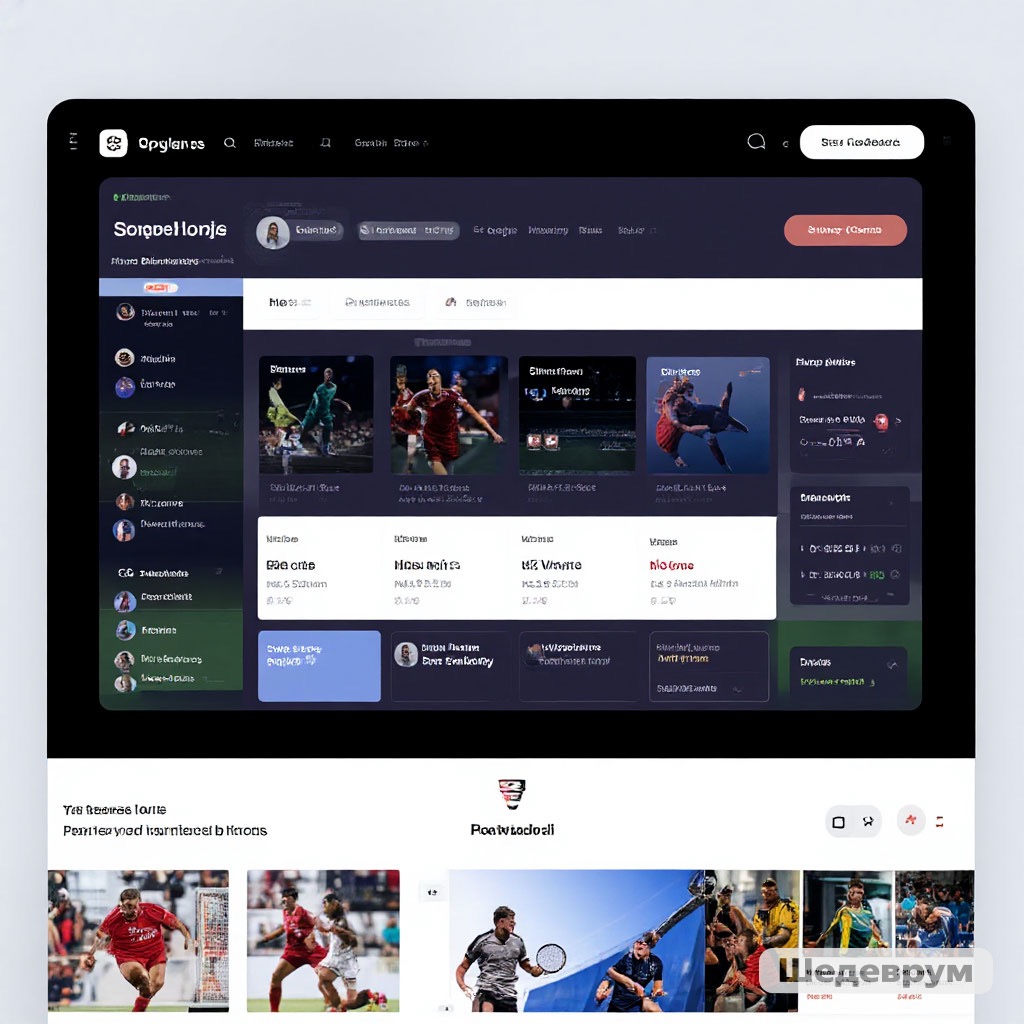
In the modern world, sports data is in demand like never before. Developers, betting platforms, sports media, and analysts need accurate, up-to-date, and comprehensive information about matches, results, and player statistics. This is where sports APIs come to the rescue – interfaces that allow real-time data retrieval and integration into applications, websites, and analytical systems.
Among popular solutions, MELBET API stands out and API-sport. In this article, we will examine their capabilities, compare them based on key criteria, and show why API-sport is becoming the optimal choice for professional projects.

What is API-sport?
API (Application Programming Interface) is a set of tools and protocols that allows applications to exchange data. API-sport – is a modern platform for obtaining sports information that covers dozens of sports and provides data on live events, player statistics, match results, and historical archives.
The platform is popular among developers and large projects due to its high update speed, data accuracy, and convenient documentation. API-sport allows for the integration of information for betting, sports analytics, media, and fan applications.
Features of API-sport:
-
Wide coverage of disciplines: football, hockey, basketball, tennis, esports, and others.
-
Access to live data and archives.
-
Support for modern technologies: REST, WebSocket, JSON.
-
Easy integration and flexible pricing.
MELBET API
MELBET API is focused on betting and odds calculation. It allows you to obtain:
-
Match results and tournament statistics.
-
Odds and probabilities of outcomes.
-
Team lineups and player statistics.
-
Information on transfers and roster changes.
Supported sports
MELBET API covers the main disciplines: football, hockey, basketball, tennis, as well as esports. However, the number of available sports and tournaments is limited compared to API-sport.
Technologies and formats
MELBET uses standard data transmission formats: REST API, JSON, and XML. For live data, WebSocket is available, but its functionality is limited and requires additional configuration.
How to access the API?
To connect to MELBET API or API-sport the first step is to register on the official platform. The process includes several stages:
- Creating an account – you need to register on the service’s website by providing your email and other contact details.
- Tariff selection – platforms offer several tariff plans depending on the volume of data, update frequency, and access to live statistics.
- Obtaining an API key – after registration and selecting a tariff, you receive a unique key that is used for authorizing requests to the API.
- Access configuration – for professional projects, IP restrictions or additional security settings may be required.
Difference API-sport: the platform provides flexible tariffs, the ability to test the API in demo mode immediately, and detailed documentation for each sport. MELBET API does not offer such flexibility and detailed integration guides, which complicates a quick start for large projects.
10. RapidAPI, SportRadar, and other platforms provide access to BetsAPI and Livescore API through their channels. This is convenient for developers who need ready-made integrations and reliable SLAs.
MELBET API data is sometimes available through third-party aggregators, for example:
-
RapidAPI – provides access to a limited set of MELBET data, primarily match results and odds.
-
SportRadar – also aggregates sports data, including live events, but access to some features of the MELBET API is limited.
The drawback of third-party providers is that the data update speed decreases, and some key API features, such as live odds and forecasts, may be unavailable. In turn API-sport offers direct access to the complete data set, with high update speed and operational stability, which is critical for betting platforms and analytical applications.
12. Free plans usually include limited access to historical data and basic statistics. Paid subscriptions unlock:
Free access:
-
Provides basic data – match schedules, results, limited statistical indicators.
-
Suitable for testing integration or small applications where live updates and historical archives are not required.
Paid plans:
-
Opens full access to live data, advanced player statistics, team lineups, and transfers.
-
Allows the use of predictive models, integration of data into analytical platforms and BI systems.
-
Extended plans allow increasing request limits and connecting multiple data sources simultaneously.
API-sport Differs in that even the basic paid plan provides access to a large number of sports, live results, and archives, while the MELBET API is limited in the number of disciplines and update speed.
17. Number of requests per minute/hour
MELBET API:
-
Clearly limits the number of requests per minute/hour.
-
Live data updates slower than specialized platforms.
-
Sometimes a separate subscription is required for each sport or tournament.
API-sport:
-
Offers a flexible limit system – the number of requests can be increased according to the project’s needs.
-
Live data is updated almost instantly via WebSocket, without constant polling of the server.
-
Ideal for large platforms, analytical services, and high-load applications.
For small test projects, the MELBET API may be sufficient, but for professional integration and large-scale solutions API-sport provides more stable, flexible, and complete access to sports data.
API Integration
Connection examples (Python, JavaScript)
Python example:
import requests
url = «https://api-sport.pro/v1/football/matches»
headers = {«X-API-Key»: «your_API_key»}
response = requests.get(url, headers=headers)
print(response.json())
JavaScript example:
fetch(‘https://api-sport.pro/v1/football/matches’, {
headers: { ‘X-API-Key’: ‘your_API_key’ }
})
.then(res => res.json())
.then(data => console.log(data));
Integration into CMS and mobile applications
API-sport easily connects to WordPress, Android, and iOS applications, allowing the display of match results, statistics, and forecasts directly in the user interface.
Using live data via WebSocket
Live data via WebSocket allows for instant updates without constant polling. This is especially important for real-time betting, analytics, and interactive applications.
 Where is it used?
 Where is it used?
-
In betting and odds scanners – accurate information for calculating bets.
-
In sports analytics and forecasts – analysis of trends and statistics.
-
In media and fan applications – publication of live results and news.
-
In Fantasy Sports and esports – calculation of points, lineups, and results.
-
In BI systems and Big Data projects – integration for deep data analysis.
Advantages and disadvantages
When it comes to choosing an API for sports data, it is important to consider not only the amount of available information but also the speed of its updates, integration flexibility, and scalability.
API-sport
API-sport stands out among competitors with a wide range of disciplines and tournaments. The platform supports dozens of sports – from football and hockey to basketball, tennis, and esports – and covers the largest national and international championships. Thanks to this diversity, developers can use the API for various projects: from betting and fan applications to analytical systems and Fantasy Sports.
Moreover, the speed of updates and data accuracy at API-sport are at a high level. Live events are transmitted almost instantly, which is especially important for applications where every minute counts – for example, when calculating bets or displaying statistics in real time.
Another important aspect is the flexibility of tariffs and ease of integration. API-sport offers several subscription levels that allow scaling the project as the load increases, and detailed documentation and SDK make connecting to the platform convenient even for complex projects.
MELBET API
In turn, MELBET API provides direct access to odds and outcomes, making it useful for betting platforms that need to quickly obtain calculations and forecasts. However, the number of available sports and tournaments is significantly limited compared to API-sport.
The data update speed of the MELBET API is lower, especially for live results and player statistics. This can be critical for applications where the timeliness of information is important.
Finally, the integration capabilities of the MELBET API into large-scale projects are also limited. For large platforms or analytical systems, additional configuration will be required, and some features are only available through paid or third-party solutions.
In short: API-sport it is suitable for projects where wide coverage, high update speed, and integration flexibility are important, while the MELBET API is more focused on basic access to odds and outcomes, with fewer disciplines and limited scaling capabilities.

In summary
If your goal is to obtain a wide range of data, high update speed, and integration with various applications, API-sport clearly outperforms the MELBET API.
API-sport registration: https://app.api-sport.ru/register
Our TG channel with updates: https://t.me/apisportru.
FAQ
Is there free access to API-sport?
Yes, basic data is available for free, while advanced features require a paid plan.
What sports are supported?
API-sport covers dozens of disciplines: football, hockey, basketball, tennis, esports, and others.
Is the API suitable for betting?
Yes, betting platforms can be built using live data and odds.
How to connect the API to the application?
Use REST or WebSocket with an API key, integrating via Python, JavaScript, or mobile SDKs.
Can the API be used for predictions?
Yes, data on statistics and match history allows for the construction of predictive models.
What limitations does the API have?
Limits on the number of requests and update speed. API-sport offers more flexible conditions for large projects.