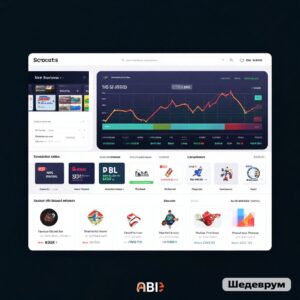
In the modern world of sports, information is updated every second. Fans, analysts, and betting companies constantly need fast and accurate data: from team lineups to current bookmaker odds. This is exactly the task that sports APIs solve — ready-made tools that allow you to obtain statistics and live data directly from reliable sources.
One of the most popular solutions is API-deporte, which is used by application developers, betting platform owners, sports media, and analysts to create forecasts, automate calculations, and improve user experience.

¿Qué es API-sport?
API (Application Programming Interface) is an interface for interaction between applications and services. In sports, APIs allow you to obtain structured data about matches, players, teams, and statistics without the need to collect them manually.
API-deporte — is one of the largest platforms offering access to sports data in real-time. The service became popular due to its wide support for sports and convenient data format.
What API-sport provides:
-
match results and statistics (live and archive);
-
bookmaker odds and their dynamics;
-
team lineups, injuries, transfers;
-
analytics on players and clubs;
-
data on upcoming events.
The feature of API-sport is the high speed of updates, wide coverage of sports, and support for formats convenient for integration.
How to build a betting prediction service based on the API?
For the forecasting service to be truly useful and competitive, it must rely not on individual indicators, but on a comprehensive information base. It is precisely sports APIs provide access to such a volume of data that is practically impossible to collect manually.
- Match results and live updates.
Current scores and game dynamics in real-time are the foundation for any forecasts. For example, if a team often scores in the second half, the analytical system can take this trend into account and increase the likelihood of the outcome «total over» after the break. - Bookmaker odds.
Odds are not just numbers, but a reflection of market expectations and analysts’ forecasts. Tracking their changes allows you to identify hidden patterns. For example, if the odds sharply drop for one team’s victory, it may be related to insider information or mass player betting. - Player and team statistics.
Detailed metrics — shots on goal, ball possession, number of rebounds or three-pointers in basketball — form an objective picture of the opponents’ strength. Based on them, you can build probability prediction models based not on emotions, but on numbers. - Lineups, substitutions, and injuries.
Even the strongest team can lose if a key player is injured or the coach decides to field a reserve lineup. The API provides this data in live mode, which is critical for adjusting forecasts right during the match. - Transfers and match history.
The history of encounters between teams, player transfers, changes in the coaching staff — all this affects long-term statistics and allows for more accurate predictions for tournaments and entire seasons.
It is the combination of all these blocks in one system that allows:
-
to calculate the probability of outcomes taking into account multiple factors;
-
to identify hidden trends and dependencies;
-
to generate automatic or semi-automatic predictions for users;
-
to increase audience trust through transparency and depth of analytics.
Prediction service based on API — it is not just a «program that shows the score,» but a full-fledged analytical tool capable of competing in prediction quality with professional tipsters.
Deportes soportados
API-sport covers dozens of disciplines:
-
fútbol, hockey, baloncesto, tenis;
-
volleyball, handball, baseball;
-
esports (CS:GO, Dota 2, LoL, etc.).
This variety allows for the creation of services not only for mass sports but also for niche areas.
Tecnologías y formatos
The API works through modern protocols and formats:
-
REST API — for classic HTTP requests;
-
WebSocket — for live data without delays;
-
JSON and XML — convenient formats for processing information in applications.
¿Cómo acceder a la API?
The first and most obvious way to start working with API-deporte — is to register on the official website. The process is simple and takes a few minutes:
- Registration on the platform. An account is created, which allows managing keys, tariffs, and usage statistics.
- Obtaining a personal API key. This is a unique identifier that is used with each request to the server. Without it, access to the data is impossible.
- Tariff selection. At the start, you can try the free plan to test the API and evaluate its functionality. For serious projects, PRO tariffs are often chosen, where advanced features are available.
Official access provides maximum flexibility: always up-to-date data, complete documentation, and support from developers.
RapidAPI, SportRadar y otras plataformas proporcionan acceso a BetsAPI y Livescore API a través de sus canales. Esto es conveniente para los desarrolladores que necesitan integraciones listas y SLA confiables.
It is not always convenient to work directly through the official website, especially if the developer has multiple data sources. In such cases, integration through third-party platforms comes to the rescue:
-
RapidAPI is the largest API marketplace, where you can connect dozens of services, including sports, through a single interface. The advantage is that all requests and payments are managed through one panel, and integration is simplified by ready-made SDKs.
-
SportRadar is a major competitor to API-sport, known for deep analytics, wide coverage, and collaboration with professional leagues. However, its services are more expensive, making it more suitable for large companies and bookmakers.
The choice of provider depends on the goals: for a quick start, RapidAPI is more convenient, for global solutions — SportRadar, and for flexibility and price/quality balance — API-sport directly.
Los planes gratuitos generalmente incluyen acceso limitado a datos históricos y estadísticas básicas. Las suscripciones de pago desbloquean:
Most sports APIs have a flexible subscription system.
Plan gratuito usually includes a limited number of requests (for example, up to 1000 per month) and basic data: match results, minimal statistics, access to several sports. It is good for testing or educational projects.
Planes de pago unlock the full potential of the API:
- advanced statistics blocks (shots, fouls, passes, etc.);
- more limits on requests;
- access to archived data and match history;
- priority updates of live information.
The free tariff is suitable for starting, while paid ones are for services where stability and completeness of data are important.
Número de solicitudes por minuto/hora
 Even in paid tariffs, there are technical limitations that are important to consider during development.
-
The number of requests per day or month. Each API call is counted. If your service actively uses live data, limits need to be planned in advance.
-
Data update speed. In free tariffs, odds and events may update with a delay, while in PRO integrations — almost instantly.
-
Access to archives. Historical data is often limited: free tariffs provide a few months, while paid ones offer multi-year archives, which is important for building analytical models.
It is the understanding of these limits that allows for the proper design of forecasting services: balancing between subscription cost and the necessary volume of information.
Integración de API
Ejemplos de conexión (Python, JavaScript)
Python
importar solicitudes
url = «https://api.sportsdata.io/v4/soccer/scores/json/Competitions»
headers = {«Ocp-Apim-Subscription-Key»: «YOUR_API_KEY»}
respuesta = solicitudes.get(url, encabezados=encabezados)
imprimir(respuesta.json())
JavaScript
fetch(«https://api.sportsdata.io/v4/soccer/scores/json/Competitions», {
headers: { «Ocp-Apim-Subscription-Key»: «YOUR_API_KEY» }
})
.then(response => response.json())
.then(data => console.log(data));
Integración en CMS y aplicaciones móviles
-
In the WordPress API, you can connect through plugins or custom code.
-
SDKs and ready-made libraries are available for Android/iOS.
Uso de datos en vivo a través de WebSocket
Unlike periodic polling requests, WebSocket provides instant updates. This is critical for betting, where odds and events change every second.

¿Dónde se utiliza?
-
In betting and odds scanners.
-
In sports analytics and forecasting systems.
-
In media and fan applications.
-
In Fantasy Sports and esports.
-
In BI systems and Big Data projects.
En resumen
Building a betting prediction service based on the API is feasible: just register, get a key, and properly integrate the data into the application. API-deporte provides all the necessary tools — from live statistics to odds, making it a universal solution for betting, sports applications, and analytics.
Registration: https://app.api-sport.ru/register
Our TG channel with updates: https://t.me/apisportru.
Preguntas frecuentes
¿Hay acceso gratuito?
Yes, API-sport offers a free plan with a limited number of requests.
¿Qué deportes son compatibles?
From football and hockey to esports — dozens of disciplines.
¿Es la API adecuada para apuestas?
The API provides odds and statistics that can be used for predictions and integration into betting services.
¿Cómo conectar la API a la aplicación?
Just get a key and use HTTP requests or WebSocket.
¿Se puede usar la API para predicciones?
Yes, statistics and odds are perfect for creating predictive models.
Are there any request limits?
Yes, depending on the plan, the number of requests and update speed is limited.