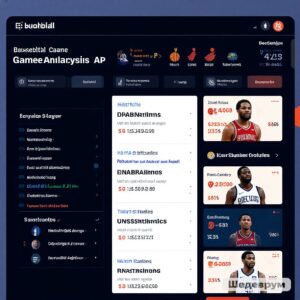
The modern sports market operates at data speed: match results, bookmaker odds, player statistics, and even transfers are updated in real time. For betting, media, and analytics, it is critical to have accurate and fast sources of information. This is where sports APIs come to the rescue — they solve the problem of accessing structured data that would otherwise have to be collected manually from bookmaker or sports league websites.
One of the most popular solutions is API-deporte — a service that simplifies data handling for developers, betting platforms, sports media, and analysts.
¿Qué es API-sport?
API (Application Programming Interface) is a tool for automated data exchange between applications. In sports, it provides access to match results, bookmaker odds, statistics, and archives.
API-deporte — one of the leading services in this field. It has become popular due to its wide coverage of sports, fast data updates, and convenient integration formats. The platform offers both live data and historical statistics, making it a versatile solution for analytics and applications.
Differences of API-sport from competitors:
-
support for dozens of sports;
-
convenient formats (JSON, XML);
-
the ability to work via REST and WebSocket;
-
optimal price-to-functionality ratio.

BC Parser: data collection for analytics and applications
In fact, API-deporte it can be considered a full-fledged parser for bookmakers and sports leagues, which eliminates the need to manually collect data from various websites. It aggregates and structures information, making it convenient for integration into analytical systems, applications, or websites.
Here is what data is available:
-
Match results and live scores.
The service provides real-time data on current matches: from live scores to final results. This is especially important for live betting, where each update can affect the strategy of the player or platform. -
Odds and the dynamics of their changes.
The API records bookmaker odds and allows for analysis of how they change before and during the match. This is a key tool for odds scanners, finding «arbitrage» opportunities, and building predictive models. -
Team lineups and substitutions.
Before the game and during the match, data on the starting lineup, tactical changes, and substitutions can be obtained. For analysts and bettors, this is valuable, as the absence of a key player can significantly change the probability of an outcome. -
Player statistics.
Detailed metrics for each athlete: goals, assists, cards, shots, rebounds, time on the court, and much more. This is the basis for predictions on individual metrics (totals, player efficiency) and for Fantasy Sports. -
Information on transfers.
The service updates data on player transfers between clubs. This data allows tracking changes in team strength and adjusting predictions. -
Tournament tables and schedules.
The API generates championship tables and game calendars. This is convenient for applications with match schedules, sports media, and fan services.
All this data is used in various scenarios:
-
for calculating bets and finding favorable odds;
-
for building forecasts and analytics;
-
for filling websites and applications with live content;
-
for automating betting platforms and monitoring systems.
It is precisely thanks to such a rich set of data API-deporte that it has become a basic tool for everyone working with betting, sports analytics, and applications.

Deportes soportados
Strengths API-deporte — this is indeed a wide range of disciplines. The platform is not limited to just football or hockey, like many analogs, but covers almost all in-demand sports, including esports.
Fútbol is presented as fully as possible: from top championships like the English Premier League, La Liga, and Serie A to lesser-known tournaments in Asia, Africa, and Latin America. This is convenient for both international projects and niche services that work with local leagues.
Hockey — another important category. The API includes NHL and KHL matches, as well as regional championships that are of interest to fans and analysts. Data on scores, lineups, shots, penalties, and other specific statistics are available.
Baloncesto is presented just as widely. In addition to the famous NBA and Euroleague, there is information about national championships in Europe and Asia. This makes the API useful for predictions and applications where it is important to consider not only elite tournaments but also less popular ones.
Tennis covers both Grand Slam tournaments and regular ATP and WTA competitions. For each game, you can get the score by sets, rally statistics, aces, double faults, and much more.
Esports occupies an increasingly important place in the modern industry. API-sport supports popular disciplines — CS:GO, Dota 2, League of Legends. Unlike traditional sports, the focus here is on live data, team lineups, and match moves, which is especially valuable for predictions and fan applications.
The platform works as a universal source of information: from traditional football to the rapidly growing segment of eSports. Thanks to this, API-sport can be used for both classic betting applications and new projects in the field of esports analytics.
Tecnologías y formatos
-
REST API — standard HTTP requests.
-
WebSocket — for working with live data without delays.
-
JSON, XML — convenient formats for integration into various systems.
BC Parser: data collection for analytics and applications
To start using API-sport as a bookmaker parser and integrate sports data into your projects, you need to go through a few simple steps.
1. Registration on the API-sport website.
First of all, it is necessary to create a personal account on the official website of the service. Registration is quick: just provide an email address, create a password, and confirm the account. After that, the user gains access to the control panel, where they can test the API and track request statistics.
2. Obtaining a personal API key.
After activating the account, a unique key is issued. an API key. It is needed for the system to identify your requests and differentiate access depending on the chosen tariff. Each request to the server must contain this key in the headers; otherwise, data will not be provided. Essentially, it is a «pass» to sports statistics.
3. Choosing the right tariff.
API-sport offers several subscription options:
-
Free plan — a limited number of requests per day, access to basic information, and API testing. Suitable for exploring the service’s capabilities or small projects.
-
Standard tariffs — extended limits on requests, access to live data, the ability to work with several sports at once.
-
PRO packages — professional plans for large applications and analytical platforms. Here, the maximum limits, priority updates of live data, and technical support are provided.
Thus, after registration and tariff selection, the developer receives everything necessary: a working API key, access to documentation, and the ability to start integrating data into their project.
RapidAPI, SportRadar y otras plataformas proporcionan acceso a BetsAPI y Livescore API a través de sus canales. Esto es conveniente para los desarrolladores que necesitan integraciones listas y SLA confiables.
In addition to direct connection through the official website, many use third-party aggregator platforms. They allow working with API-deporte and other services through a single interface, which is convenient if the project needs several sources of sports data at once.
-
RapidAPI is one of the largest API marketplaces. Through it, you can connect API-sport without the need to create a separate account on the official website. The advantage is that RapidAPI provides a single interface for working with dozens of different APIs: from sports statistics to payment systems. This saves developers’ time and allows for flexible subscription management.
-
SportRadar is one of the most well-known competitors of API-sport. Its main advantage is advanced analytics and deep statistics, including biometric data, detailed match events, and historical archives. Such functionality is in demand among large betting companies and professional analytical platforms. However, SportRadar also has a downside — high prices, which makes it less accessible for small projects.
The choice depends on the tasks: if simplicity and optimal cost are needed — suitable API-deporte, if depth and scale are important — SportRadar, and if flexible connection to several services is required — RapidAPI is convenient.
Integración de API
Ejemplos de conexión (Python, JavaScript)
# Python example
importar solicitudes
url = «https://api-sport.pro/v1/football/matches»
encabezados = {«x-apisports-key»: «YOUR_API_KEY»}
respuesta = solicitudes.get(url, encabezados=encabezados)
imprimir(respuesta.json())
// JavaScript example
fetch(«https://api-sport.pro/v1/football/matches», {
headers: { «x-apisports-key»: «YOUR_API_KEY» }
})
.then(res => res.json())
.then(data => console.log(data));
Integración en CMS y aplicaciones móviles
-
WordPress — plugins for displaying match results.
-
Android/iOS — using API in applications for live results and statistics.
Uso de datos en vivo a través de WebSocket
Polling (constant requests) overloads the system and causes delays. WebSocket allows for instant data retrieval, which is especially important for live betting and forecasts.
¿Dónde se utiliza?
-
In betting and odds scanners.
-
In sports analytics and forecasts.
-
In media and fan applications.
-
In Fantasy Sports and esports.
-
In BI systems and Big Data projects.
Alternativas a API-sport.
There are other sports data providers:
-
SportRadar — deeper in analytics, but more expensive.
-
Stats Perform — focus on AI and predictions.
-
TheSportsDB — community-driven, cheaper, but limited coverage.
It is worth using competitors if specialized data or specific formats are needed (for example, advanced biometric metrics of players).

Preguntas frecuentes
¿Hay acceso gratuito?
Yes, but with limitations on requests and types of sports.
¿Qué deportes son compatibles?
Football, hockey, basketball, tennis, esports, etc.
¿Es la API adecuada para apuestas?
Yes, many betting platforms use API-sport for odds analysis.
¿Cómo conectar la API a la aplicación?
Through REST requests or WebSocket. An API key is required for this.
¿Se puede usar la API para predicciones?
Yes, statistics and live data allow building predictive models.
What is the difference between REST and WebSocket?
REST is convenient for requests to archives, WebSocket is for instant updates of live data.