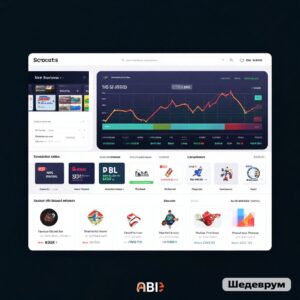
Modern sports are not only about emotions and victories on the field, but also about analytics. To understand how players perform, predict match results, and build strategies, accurate and up-to-date data is essential. This is where sports APIs come to the rescue. They allow for the automatic retrieval of data about matches, teams, players, and even betting odds.
API-deporte — one of the leading services in this field. It offers a wide range of data for developers, sports analysts, media, and betting platforms, allowing the integration of current player metrics into applications, websites, and analytical tools.
The API for analyzing individual player metrics is useful for:
-
Developers of mobile and web applications who want to display player statistics in real-time.
-
Betting platforms and odds scanners for accurate bet calculations.
-
Sports media for publishing statistics, forecasts, and analytics.
-
Analysts and research teams for working with data and predicting outcomes.

¿Qué es API-sport?
An API (Application Programming Interface) is an interface for data exchange between applications. It allows for the retrieval of statistics and information without manual searching and data processing.
API-deporte — a specialized service providing sports data in a structured format. The platform has been around for several years and has established itself as a reliable source for obtaining live data, match statistics, player history, and transfers.
Data available through API-sport:
-
Live match results.
-
Player and team statistics.
-
Information about lineups, transfers, and disciplinary events.
-
Archived data and historical results.
Features of API-sport:
-
High data update speed.
-
Wide coverage of sports.
-
Support for both REST requests and WebSocket for live data.
-
The ability to integrate with analytical platforms and betting services.
Data available through API-sport
API-deporte provides a comprehensive set of information that helps analyze individual player and team performance in real-time and based on historical data.
Live match results allow for instant updates on the progress of games: who scored a goal, what substitutions were made, what cards players received. This is especially useful for betting applications, sports analytics, and media, where it is important to instantly reflect events on the field.
Estadísticas de jugadores y equipos includes a variety of metrics: the number of goals scored and conceded, assists, passing accuracy, percentage of duels won, timing, and effectiveness of actions on the field. For each athlete, changes in form and performance dynamics can be tracked throughout the season.
Information about lineups, transfers, and disciplinary events helps track changes in teams, learn about new players and those leaving the roster, and record disqualifications and injuries. This data is especially valuable for analysts and developers of predictive models, as the team composition directly affects match results.
Archived data and historical results allow for the construction of long-term analytical reports: tracking statistics from past seasons, comparing player metrics with each other, analyzing trends, and identifying patterns. Such data is indispensable for research projects, large analytical systems, and preparing forecasts for future matches.
In total, this dataset makes API-sport a powerful tool for analyzing individual player metrics and making informed decisions in sports analytics and betting.
Deportes soportados
API-sport covers:
-
Football, hockey, basketball, tennis.
-
Esports (Dota 2, CS:GO, and other disciplines).
-
Rugby, baseball, and other popular sports.
Tecnologías y formatos
-
REST API — a classic way to make requests via URL with a response in JSON or XML.
-
WebSocket — for receiving live data without constant polling of the server.
-
JSON — a universal data format convenient for processing in applications.
-
XML — for compatibility with legacy systems and integrations.
Access to the API for analyzing individual player metrics
To start working with the API for analyzing individual player metrics through the official API-sport website, you need to go through a few simple but important steps.
- Registration on the platform. The first step is to create an account on the API-sport website. The registration process is standard: enter your email, create a password, and confirm your account via email. After registration, you gain access to your personal account, where you can manage API settings, track request statistics, and view available plans.
- Obtaining a personal API key. An API key is a unique code that allows secure access to the service and data retrieval. After registration, you will be able to generate your key in your personal account. This key must be used in every API request so that the platform understands that the request is sent by an authorized user. Without a key, access to the data is impossible.
- Choosing a tariff plan. API-sport offers several pricing plans to meet different needs:
The free plan is suitable for testing, small projects, or applications with a limited number of users. It provides access to basic statistics, a limited number of requests, and some live data.
Paid plans provide full access to live data, extended player statistics, archives, and additional features. The higher the plan, the more requests per minute/day and the wider the range of available data.
After selecting a plan, you are ready to integrate API-sport into your projects: receive live match data, track player metrics, build forecasts, and analytical reports.
RapidAPI, SportRadar y otras plataformas proporcionan acceso a BetsAPI y Livescore API a través de sus canales. Esto es conveniente para los desarrolladores que necesitan integraciones listas y SLA confiables.
API-sport is also available through third-party platforms:
-
RapidAPI is a marketplace for connecting various APIs through a single dashboard.
-
SportRadar is a competitor with deeper analytics but is usually more expensive.
Número de solicitudes por minuto/hora
-
The number of requests per minute or day.
-
The speed of live data updates.
-
Limitations on the volume of historical data in the free version.
Integración de API
Ejemplos de conexión
Python:
importar solicitudes
url = «https://api.sportsdata.io/v4/soccer/scores/json/Players»
headers = {«Ocp-Apim-Subscription-Key»: «YOUR_API_KEY»}
respuesta = solicitudes.get(url, encabezados=encabezados)
data = response.json()
print(data)
JavaScript:
fetch(«https://api.sportsdata.io/v4/soccer/scores/json/Players», {
headers: {«Ocp-Apim-Subscription-Key»: «YOUR_API_KEY»}
})
.then(response => response.json())
.then(data => console.log(data));
 Integración en CMS y aplicaciones móviles
 Integración en CMS y aplicaciones móviles
-
WordPress: plugins and REST requests for displaying player statistics.
-
Android/iOS: using JSON API responses to update the interface in real time.
Uso de datos en vivo a través de WebSocket
-
Allows receiving match events instantly.
-
Better than regular polling, as it reduces server load and update latency.
¿Dónde se utiliza?
In betting and odds scanners.
The API for analyzing individual player metrics is actively used in betting. Platforms and odds scanners receive up-to-date information about player form, team lineups, injuries, and match results. This allows for calculating accurate probabilities for event outcomes, updating odds in real-time, and offering users relevant bets. Thanks to live data and player statistics, complex forecasting models can be formed, helping bookmakers and analysts make more informed decisions.
In sports analytics and predictions
For sports analysts and coaches, the API data becomes a true research tool. They allow tracking the performance of individual players, analyzing their metrics by seasons and matches, and identifying the strengths and weaknesses of the team. This not only helps build forecasts for future games but also optimizes tactics, evaluates potential transfers, and makes decisions based on accurate figures rather than just intuition.
In media and fan applications for displaying statistics
Sports media and fan applications actively use the API to display player and team statistics. In real-time, users can see match results, detailed statistics, rankings, and changes in team lineups. Such data makes the content more engaging, and the applications themselves useful for fans following their favorite teams and athletes.
In Fantasy Sports and esports
Fantasy Sports and esports platforms use the API to analyze individual player metrics and form game rankings. Participants can see the current metrics of their virtual teams, make decisions on transfers, lineups, and strategies based on real statistics. In esports, such data helps analyze the performance of esports athletes and build forecasts for tournaments.
In BI systems and Big Data projects
The API for analyzing individual player metrics is also used in large analytical systems. With the help of data, reports, forecasting models, and visualizations can be built. This is important for Big Data projects, where it is necessary to analyze large volumes of information about matches, players, and teams. Companies use such data to assess athlete performance, plan strategies, and develop new analytical products.

Preguntas frecuentes
¿Hay acceso gratuito?
Yes, API-sport offers a limited free plan.
¿Qué deportes son compatibles?
Football, hockey, basketball, tennis, esports, and others.
¿Es la API adecuada para apuestas?
Yes, data on coefficients and odds can be used to calculate bets.
¿Cómo conectar la API a la aplicación?
Through REST requests or WebSocket using an API key.
¿Se puede usar la API para predicciones?
Yes, player statistics and metrics allow for building predictive models.
Are there third-party providers?
Yes, RapidAPI and SportRadar offer alternative ways to access data.