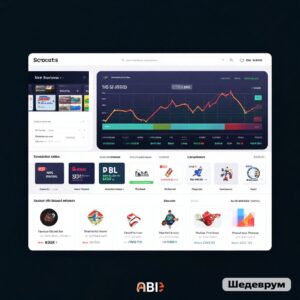
Modern technologies allow for real-time tracking of sports events, analyzing results, and making predictions. Here, sports APIs come to the rescue – interfaces that automatically provide data on matches, results, player statistics, and odds.
API-sport – is one of the leaders in the sports API market. The service is suitable for application developers, betting platforms, sports media, and analysts who want to receive accurate and up-to-date data without manual information gathering.
The problem that sports APIs solve is simple: they save time and provide a reliable source of data for any sports-related projects.

API-sport: what it is and how it is useful
API (Application Programming Interface) is an interface that allows one program to obtain data from another. In the case of API-sport, this is data on sports events in various formats: live, statistics, historical archives.
API-sport appeared as a universal tool for integrating sports statistics and quickly gained the trust of major betting platforms and media.
Available data:
-
Live match results
-
Player and team statistics
-
Archives of previous seasons
-
Odds and results for betting
API-sport has several strengths that favorably distinguish it from competitors. First of all, it has wide coverage — the service supports dozens of sports disciplines, and among them, of course, is baseball. Secondly, the platform provides a high speed of data updates: results and statistics appear almost in real time, which is especially important for betting and analytics. And finally, API integration poses no difficulties — developers have access to ready-made SDKs and detailed documentation, which makes the connection process as simple and quick as possible.
Baseball API — what does the market offer?
 The Baseball API is mainly focused on betting and predictions. Typical data:
-
Match results
-
Odds and probabilities of outcomes
-
Team lineups and player statistics
-
Transfers and changes in teams
This data helps analysts and bettors make decisions, however, in terms of volume and quality of information API-sport it significantly surpasses specialized baseball services.
Supported sports
The Baseball API is often limited to one discipline or a narrow range of sports.
API-sport, on the contrary, supports:
-
Football, hockey, basketball
-
Tennis, volleyball, handball
-
Esports and other disciplines
This makes the platform universal and advantageous for multi-sport projects.
Technologies and formats
-
REST and WebSocket
-
Data formats: JSON, XML
API-sport additionally provides easy access to live data via WebSocket, which speeds up updates and reduces server load.
How to access the API?
To start using API-sport, it is enough to go through a simple connection procedure. First, you need to register on the platform and create a personal account. After that, the user receives a personal API key — a unique identifier that grants access to requests. The next step is to choose a tariff plan: it depends on what volume of data and update speed you need. Thus, the connection process is as transparent and understandable as possible, even for beginners.
10. RapidAPI, SportRadar, and other platforms provide access to BetsAPI and Livescore API through their channels. This is convenient for developers who need ready-made integrations and reliable SLAs.
Some developers prefer to access data through aggregators, such as RapidAPI or SportRadar. This is indeed a convenient option, especially if you are working with several APIs at once. However, this approach has its downsides: functionality may be limited, and updates sometimes come with delays. For projects where timeliness is important, a direct connection to API-sport will be more reliable.
12. Free plans usually include limited access to historical data and basic statistics. Paid subscriptions unlock:
The platform offers both free and paid access. On the free plan, developers receive a limited number of requests and basic data, which is suitable for testing and small projects. However, if full functionality is required, it is worth considering paid plans. They provide access to live results, bookmaker odds, extended statistics, and archives of past matches — that is, to the entire spectrum of information demanded in betting, analytics, or sports applications.
17. Number of requests per minute/hour
As with any API, there are limits here. The number of requests per minute is limited, and the higher the plan, the more requests are available. Additionally, the data refresh rate also directly depends on the chosen plan: on the basic plan, there may be slight delays, while on advanced subscriptions, information is received almost in real time.
API Integration
Connection examples
Python:
import requests
url = «https://api-sport.pro/baseball/matches»
headers = {«X-Api-Key»: «your_key»}
response = requests.get(url, headers=headers)
print(response.json())
JavaScript:
fetch(«https://api-sport.pro/baseball/matches», {
headers: {«X-Api-Key»: «your_key»}
})
.then(res => res.json())
.then(data => console.log(data));
Integration into CMS and mobile applications
-
WordPress: via REST API and plugins for JSON data
-
Android/iOS: via standard HTTP requests and WebSocket for live updates
Using live data via WebSocket
The advantage of WebSocket over polling:
-
Minimal delay
-
Real-time updates
-
Lower load on the server
Where is the API used?

-
Betting and odds scanners – forecasts and statistics
-
Sports analytics – analysis of games and players
-
Media and fan applications – match updates, results
-
Fantasy Sports and esports – team lineups and live results
-
BI systems and Big Data projects – integration with analytical platforms
Advantages and disadvantages
The main advantage API-sport lies in its scalability. The platform covers dozens of sports, including baseball, football, hockey, and even esports. This is especially convenient for projects that require access to multiple disciplines at once — there is no need to connect different APIs, all data is available in one place.
Another strong argument in favor of the service is the high speed of updates. Information about results and events appears almost instantly, which is critically important for betting platforms and analytical services.
No less important is the accuracy of the data: player statistics, match results, odds — all of this comes from reliable sources and is verified. As a result, developers, bookmakers, and analysts receive a complete and reliable set of information for their work.
Disadvantages of API-sport
Like any professional tool, API-sport has its downsides. To gain full access to all data and achieve maximum update speeds, a paid plan is required. The free version is more suitable for testing or small projects, as it has limitations on the number of requests and the set of features.
Another point is that basic technical skills are required for API integration. Documentation and SDK simplify the process, but without a minimal understanding of working with REST or WebSocket, it will be challenging.
Alternatives to Baseball API
-
SportRadar API is a good option for a niche audience, but updates are slower.
-
RapidAPI baseball packages offer simplified access, with less statistics.
-
When to better use competitors – if only baseball is needed and multi-sport integration is not required.

In summary
Comparing Baseball API and API-sport, it is easy to notice the difference in scale and capabilities. While the former is more focused solely on baseball and provides a limited set of data — match results, odds, and basic player statistics — API-sport offers a comprehensive ecosystem for working with sports.
The unique advantage API-sport lies in the fact that it combines:
-
Functionality – a unified API for dozens of sports: from football and hockey to tennis and esports. This is convenient for multi-sport projects that do not want to connect different APIs for each discipline.
-
Update speed – data arrives almost in real-time, which is critically important for betting platforms and analytics, where even a few seconds can make a difference.
-
Versatility – the platform is suitable for a wide range of fields: from mobile app development and CMS integration to use in media, analytical systems, and BI platforms.
In addition, API-sport provides access not only to live data but also to match archives, detailed player statistics, and bookmaker odds. This makes it a powerful tool for forecasting, analysis, and developing sports-related products.
If you plan to develop a project in the field of sports, betting, or analytics, API-sport is a reliable and scalable solution that significantly surpasses specialized Baseball APIs.
Registration for access: https://app.api-sport.ru/register
Our TG channel with updates: https://t.me/apisportru.
FAQ
Is there free access?
Yes, the basic API-sport tariff allows you to receive limited data for free.
What sports are supported?
API-sport covers dozens of disciplines, including baseball, football, hockey, basketball, and esports.
Is the API suitable for betting?
Yes, API-sport provides live results and odds for betting.
How to connect the API to the application?
Through HTTP REST requests or WebSocket for live updates, SDK and code examples are available on the website.
Can the API be used for predictions?
Yes, the data on results, statistics, and coefficients allows for the creation of predictive models.
Are archived data supported?
Yes, API-sport provides historical data for analysis and comparison.