
Modern sports APIs play a key role in the industry because they provide instant and accurate access to real-time event information. While bookmakers, analysts, or journalists used to spend hours manually collecting statistics and updating data, everything is now automated — the API broadcasts match results, player statistics, lineups, and even odds literally seconds after being updated on the server.
Without such tools, it is impossible to imagine the operation of modern betting platforms, which depend on the speed of odds changes; sports analytics systems, where forecasts and models are built based on statistics; media portals, which need to provide their readers with up-to-date information; as well as fan applications that must instantly show the score or result of their favorite team.
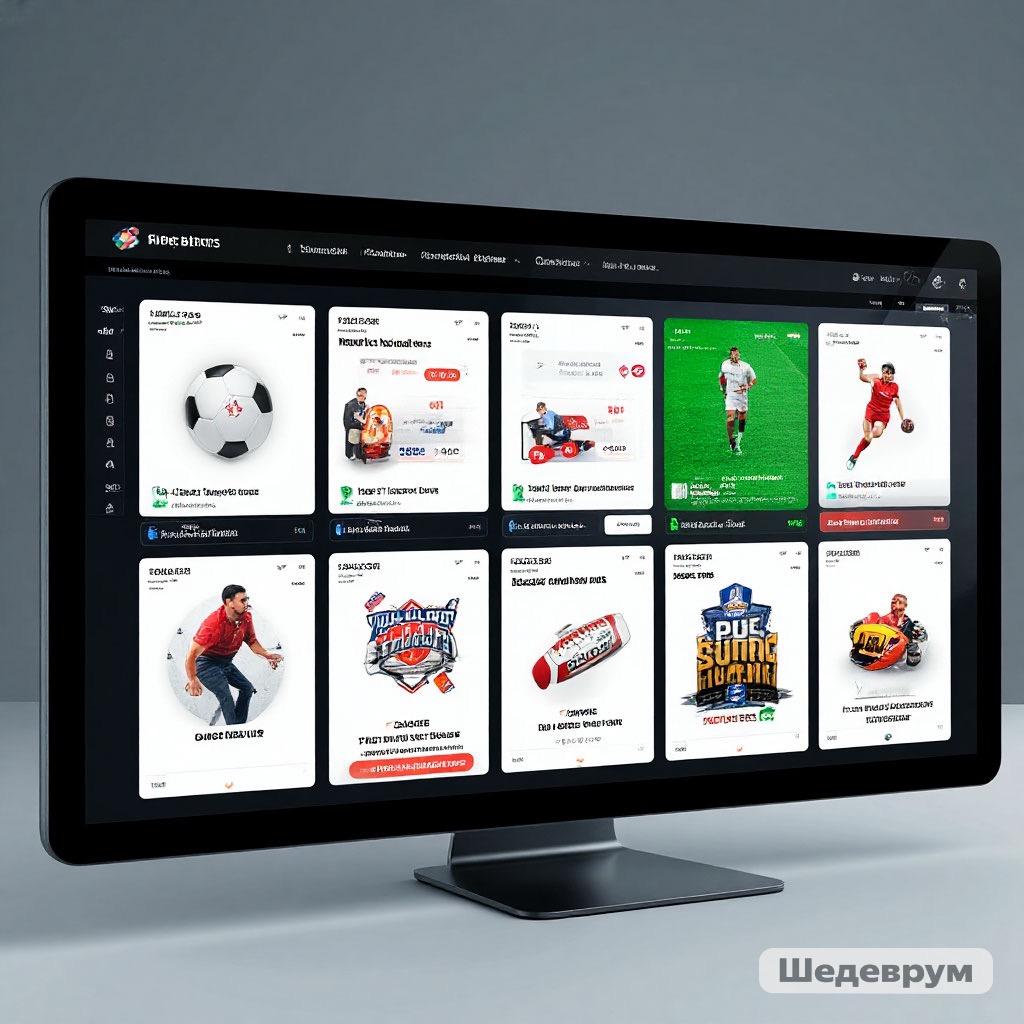
Against this background API-sport took a leading position. Its key advantage is versatility. The service covers dozens of disciplines: from the most popular ones, such as football or basketball, to niche areas like esports or rugby. This makes it particularly in demand for those who are building complex projects and do not want to be limited to just one sport.
Thanks to the high accuracy of data and stable operation, API-sport has become the choice of mobile application developers, betting companies, sports analysts, and media resources. For them, it is especially important that the service provides information updates without delays, which directly affects user trust and product competitiveness.

What is API-sport: a brief overview
API (Application Programming Interface) is an interface that allows third-party applications to access data directly from the provider’s server. In the case of API-sport users gain access to:
-
live results;
-
match statistics;
-
tournament archives;
-
information about teams and players.
The platform emerged as a universal tool for various sports and quickly became popular due to its stability, accuracy, and regular updates. Unlike niche solutions like Badminton API, the service covers dozens of disciplines and allows for the development of comprehensive projects.
Badminton API: capabilities and limitations
Badminton API provides a standard set of sports information: match results, odds, forecasts, player rosters, personal statistics, and sometimes transfer data. For tasks exclusively related to badminton, this solution can be useful, but it is limited for broader projects.
Supported sports
Unlike API-sport, which covers football, hockey, tennis, basketball, esports, and dozens of other disciplines, Badminton API is generally focused only on one sport. This reduces the value of such a solution for those working with multi-sport platforms.
Technologies and formats
Most badminton services use REST and JSON format. Occasionally, WebSocket and XML are encountered, but their support is limited. While API-sport provides flexibility and choice — developers can work with REST, WebSocket, JSON, or XML, which is especially important when integrating live data.
How to access the API?
To get started with API-sport it is necessary to register on the official website of the service. After registration, the user receives a personal API key — a unique identifier that allows secure and correct access to the API server and obtaining the necessary data. This key is required for all types of requests and provides protection against unauthorized use of the service.
After receiving the key, you need to choose a tariff plan that is suitable for your project. The tariffs differ in the number of available requests, data update speed, range of sports, and functionality. For example, a basic tariff with a limited number of requests is suitable for test projects and small applications, while for commercial platforms that require working with live data and dozens of disciplines simultaneously, it is recommended to choose an extended plan.
 10. RapidAPI, SportRadar, and other platforms provide access to BetsAPI and Livescore API through their channels. This is convenient for developers who need ready-made integrations and reliable SLAs.
 10. RapidAPI, SportRadar, and other platforms provide access to BetsAPI and Livescore API through their channels. This is convenient for developers who need ready-made integrations and reliable SLAs.
In addition to the official connection, access to the API-sport data is possible through third-party platforms and aggregators, such as RapidAPI or SportRadar. This is convenient for developers who are already using such services and want to quickly integrate data into their applications.
However, there are limitations: the functionality through aggregators is often reduced, and live results, player statistics, or archival data are not always available. Additionally, information updates may occur with a slight delay, which is important to consider for applications that work with live betting or broadcasts.
12. Free plans usually include limited access to historical data and basic statistics. Paid subscriptions unlock:
API-sport offers several tariffs, including a free one. The free version is perfect for testing and small projects: it allows a limited number of requests, provides basic statistics, and integrates the API without financial investments.
Paid tariffs are available for professional use, which unlock all functionality: access to live data, extended player statistics, team lineups, odds, and forecasts. Paid tariffs also ensure high data update speed and an increased number of requests per minute, which is critical for large projects and commercial platforms.
17. Number of requests per minute/hour
Each API-sport tariff imposes limits on the number of requests and their processing speed.
-
In the free version, the number of requests is limited, and the data update speed is lower than in paid packages. This is suitable for testing and prototypes, but not for large projects where instant information updates are important.
-
In paid tariffs, the limits are higher: the user can make more requests and work with several sports simultaneously. However, the limits depend on the chosen package — the speed of live updates, the number of requests per minute, and access to archival data vary.
Understanding these limitations allows for optimal use of the API, avoiding disruptions in application operation, and planning the service load depending on the project tasks.
API Integration
Connection in Python and JavaScript
Developers can use ready-made code examples. In Python, this can be a request through the library requests, and in JavaScript — through получить or axios.
Integration into CMS and mobile applications
API-sport is conveniently integrated into WordPress projects through plugins or custom modules. For mobile applications (Android/iOS), there are SDKs and documentation.
Using WebSocket
Working through WebSocket allows receiving live results instantly, without constant repeated requests (polling). This is especially important for betting and sports media.
Where is the API used?
 Where is the API used?
-
In betting and odds scanners.
-
In sports analytics and forecasts.
-
In media and fan applications.
-
In Fantasy Sports and esports.
-
In BI systems and Big Data analytics.
Advantages and disadvantages
Advantages API-sport:
-
dozens of sports in one API;
-
high data update speed;
-
accuracy of statistics;
-
SDK and documentation for developers.
Cons:
-
the cost of the subscription for large-scale projects;
-
limitations of the free plan;
-
the need for basic integration skills.
Alternatives to Badminton API
In addition to specialized services, there are several other data providers (for example, Sportradar or Betfair API). However, for comprehensive tasks API-sport it remains the optimal choice due to its versatility and scalability.

In summary
Badminton API can be useful if access is needed exclusively to data on one sport. But when it comes to large-scale projects — betting platforms, analytical services, or sports media, API-sport wins on all parameters: speed, data volume, stability, and support for multiple disciplines.
👉 You can register here: https://app.api-sport.ru/register
📢 Follow the updates on our TG channel: https://t.me/apisportru.
FAQ
Is there free access to API-sport?
Yes, a trial version with limited requests is available.
Is it only supported for badminton?
No, API-sport covers dozens of sports – from football to esports.
Can the API be used for betting?
Yes, the data is integrated into betting platforms and odds scanners.
How to connect the API to a mobile application?
It is enough to use ready-made SDKs for Android and iOS or connect via REST/WebSocket.
Is the API suitable for predictions and analytics?
Yes, the service provides statistics and live data that can be used in forecasting models.
Can different sports be combined in one project?
Yes, this is the key advantage of API-sport over niche solutions like Badminton API.