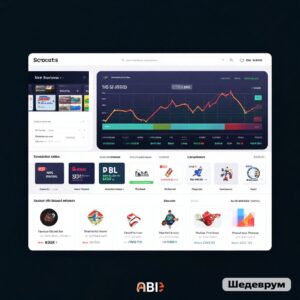
Modern digital platforms and applications in the field of sports and betting require a constant and accurate flow of data. Sports APIs solve this problem by providing information about matches, odds, team lineups, player statistics, and real-time results.
Among popular services are OLIMPBET API and API-sport. These platforms allow developers, betting sites, sports media, analysts, and fan applications to integrate relevant data directly into their services.
Who benefits from such APIs?
-
Developers: speed up work by integrating live data without manual collection.
-
Betting platforms: real-time odds updates.
-
Sports media and analysts: visualization of statistics and forecasts.
-
Fantasy Sports and esports: automatic data updates for users.

What is an API and why choose API-sport?
API (Application Programming Interface) is an interface for data exchange between services and applications. API-sport specializes in sports data and offers:
-
History and popularity: the platform has been operating for several years, establishing itself as a stable and accurate source.
-
Available data: live results, match archives, player statistics, transfers, events in the match.
-
Features of API-sport: high update speed, ready-made SDKs, support for dozens of sports, convenient documentation.
Compared to other services, API-sport it provides comprehensiveness and flexibility of integration, which is especially important for large projects with high data accuracy requirements.
OLIMPBET API: Key features
OLIMPBET API provides:
-
Odds and match results.
-
Team lineups and player statistics.
-
Data on transfers, disciplinary actions, and tournament history.
-
Information for calculating bets and event outcomes.
Supported sports
The service covers popular sports: football, hockey, basketball, tennis, esports, as well as less mainstream disciplines, but their number is limited compared to API-sport.
Technologies and formats
OLIMPBET API operates via REST and WebSocket, supports JSON and XML formats, allowing data integration into any applications and platforms.
How to access OLIMPBET API?

To start working with OLIMPBET API, the first step is to register on the official platform. After creating an account, the user needs to obtain a unique API key, which will be used for all requests to the service. This key ensures identification and access control to the data, as well as allows tracking API usage.
The platform offers several pricing plans. Free access exists, but it has significant limitations: the number of requests per minute or hour is strictly limited, and access to some sports and extended data is unavailable.
10. RapidAPI, SportRadar, and other platforms provide access to BetsAPI and Livescore API through their channels. This is convenient for developers who need ready-made integrations and reliable SLAs.
For more flexible integration, OLIMPBET API can also be used through third-party aggregator platforms, such as RapidAPI or SportRadar. These providers simplify integration, especially if you want to use multiple APIs simultaneously, but it should be noted that functionality through aggregators may be reduced. For example, some live data, detailed player statistics, or match archives may be unavailable or delayed.
12. Free plans usually include limited access to historical data and basic statistics. Paid subscriptions unlock:
The free plan usually includes:
-
Basic odds and match results.
-
Limited access to live events.
-
Basic data on teams and tournaments.
A paid subscription opens up a full range of possibilities:
-
Access to live data without delays.
-
Detailed statistics on players, teams, and tournament history.
-
Archived data on matches and tournaments from past seasons.
-
Advanced features for calculating predictions and bets.
Thus, the choice of tariff directly depends on the scale of the project and tasks — for a professional platform with a large number of users, a paid tariff is necessary.
17. Number of requests per minute/hour
When working with the OLIMPBET API, it is important to consider the following limitations:
-
The number of requests per minute or hour — the free plan is particularly limited.
-
The speed of live data updates — delays can be critical for betting and real-time analytics.
-
Support for sports — non-standard disciplines and rare tournaments may be unavailable or have limited functionality.
All these factors must be taken into account when planning integration and choosing a tariff so that the service meets your requirements for speed and data completeness.
OLIMPBET API Integration
Connection examples
Python:
import requests
url = «https://api.olimpbet.com/v1/matches»
headers = {«X-API-Key»: «your_key»}
response = requests.get(url, headers=headers)
print(response.json())
JavaScript:
fetch(«https://api.olimpbet.com/v1/matches», {
headers: { «X-API-Key»: «your_key» }
})
.then(res => res.json())
.then(data => console.log(data));
Integration into CMS and mobile applications
-
WordPress: live results widgets.
-
Android/iOS: direct update of odds and statistics via REST.
Using live data via WebSocket
WebSocket provides instant receipt of changes without constant requests to the server (polling), which is critical for betting and real-time analytics.
Where is the API used?
-
Betting and odds scanners: automatic line updates and forecast calculations.
-
Sports analytics and forecasts: visualization of statistics, model building.
-
Media and fan applications: live results, tables, news.
-
Fantasy Sports and esports: real-time score and event updates.
-
BI systems and Big Data projects: data collection and analysis for business solutions.
Advantages and disadvantages
Let’s start with the OLIMPBET API. This service provides developers and betting platforms with reliable and stable data on odds and match results. One of the main advantages is the stability of the odds, which is especially important for real-time betting. OLIMPBET also supports popular sports — football, hockey, basketball, tennis, and esports, allowing the API to be used for the most in-demand areas.
However, there are also limitations. The coverage of sports is relatively narrow, especially if you need less popular disciplines or rare tournaments. The speed of data updates does not always meet the requirements of professional betting platforms — sometimes live results come with a delay. Additionally, integration for large projects can be complex: without deep technical knowledge, connecting to the OLIMPBET API and processing all data can take a significant amount of time.
Now let’s consider API-sport. This platform features a much broader functionality and flexibility. It covers dozens of sports, including both popular and less popular areas. Both live data and archived match results are available, allowing the service to be used for analytics, forecasts, and historical research. The speed of information updates is very high, which is critical for live betting and sports applications.
API-sport It also provides ready-made SDKs and detailed documentation, making integration into web applications, mobile platforms, and analytical systems easier. Another advantage is flexible pricing, including a free starter plan and affordable subscriptions that provide full access to functionality.
The weak point of API-sport is the paid subscriptions required to access all features. However, their cost is usually lower than that of competitors, and the price/quality ratio makes the service attractive for most projects.
In conclusion, while the OLIMPBET API may be suitable for small or local projects, API-sport stands out for its versatility, speed, and scalability, making it the optimal choice for professional applications, analytics, and large platforms.
Alternatives to the OLIMPBET API.
-
FONBET API — limited access to live odds, convenient for small projects.
-
Marathon API — closed service with high cost and limited functionality.
-
API-sport — the most versatile solution with open documentation, free start, and wide support for sports.
When to choose competitors: if a specific local odds or internal bookmaker data is needed, OLIMPBET or FONBET can be used. For complex integrations, it’s better API-sport.

In summary
The comparison shows that OLIMPBET API is useful for basic tasks and small projects, while API-sport is a versatile solution with broad capabilities, high update speed, and support for dozens of sports. For developers and betting platforms, it is more profitable to use API-sport, thanks to the free start, ready documentation, and SDK.
Useful links:
-
Registration API-sport: https://app.api-sport.ru/register
- Our TG channel with updates: https://t.me/apisportru.
FAQ
Is there free access to OLIMPBET API?
Yes, but the functionality is heavily limited and covers only basic odds.
What sports are supported?
Football, hockey, basketball, tennis, esports, and a few others, but not all.
Is the API suitable for betting?
Yes, but for professional projects, it is more convenient to use API-sport due to the speed of updates and data accuracy.
How to connect the API to the application?
Through REST requests or WebSocket, JSON and XML are supported, there are examples for Python and JavaScript.
Can the API be used for predictions?
Yes, data on team composition, player statistics, and results are suitable for making predictions.
What is the main difference between OLIMPBET API and API-sport?
API-sport offers broader coverage of sports, archival data, SDK, and high update speed, making it more versatile for any projects.